A book for parents of young children
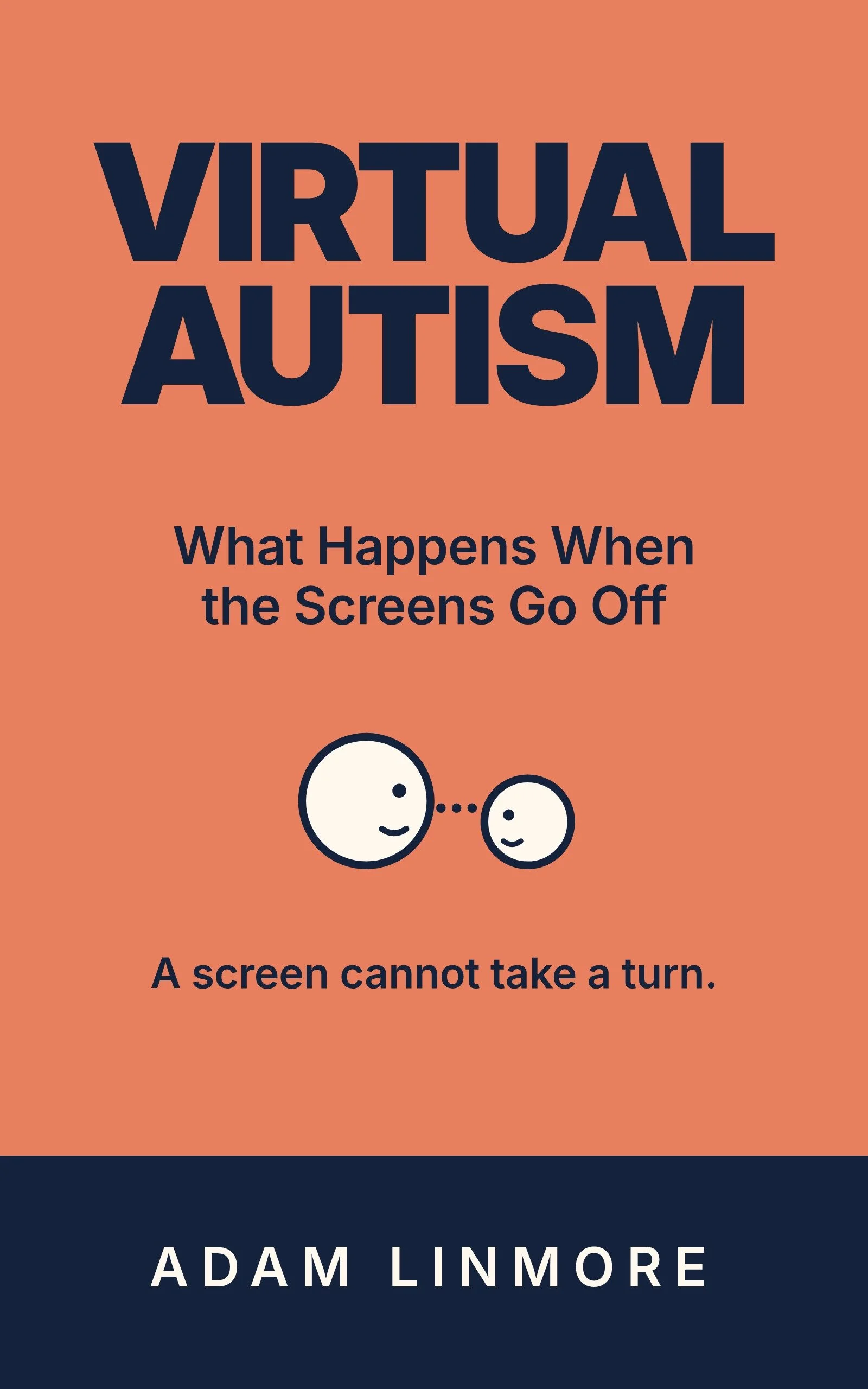
A screen cannot take a turn.
Babies learn to talk by taking turns with a person who answers them. Virtual Autism explains what the research on screens and the youngest children really shows, where it falls short, and what families can do at home.
What “virtual autism” means, and what it doesn’t
A phrase, not a diagnosis
Parents use it for autism-like signs some toddlers show after very heavy screen use. No diagnostic manual includes it.
Screens do not cause autism
Autism is a lifelong, highly heritable difference. No study has shown that screens cause it, and no parent is to blame.
The question is real
Large studies link heavy early screen time with later concerns. They cannot show cause, and the book says so plainly.
Read: What is “virtual autism”?
Four promises this book keeps
It names no one
Every identifying detail in the family story has been changed or left out.
It promises no miracle
Children change for many reasons. The book never claims a cure.
It blames no parent
Screens fill hard days in all kinds of homes. This is a book about what to add, not who to fault.
It shows its sources
More than four hundred references, with the studies’ limits stated alongside their findings.
Inside the book
The story
A toddler who stopped looking up, a television that went into hiding, and the afternoon she looked up again.
The evidence
What the largest studies have found, including one of more than 84,000 children, and where they fall short.
The guidance
What health authorities around the world advise, a guide to more than forty countries and territories, and a plan for the first week at home.
For parents, grandparents, teachers and clinicians
Paperback, hardcover and ebook.
Coming soon to Amazon and major bookstores.